
How To Walk In Crutches
📖 Table of Contents
I remember the first time I had to walk with crutches — my left leg was in a cast after a broken ankle, and the world suddenly felt like a whole lot more unstable. I had no idea where to start, and the first time I tried to shuffle forward, I felt like a toddler learning to walk for the first time. It was awkward, slow, and honestly, a little scary. But after a few days of fumbling around, I figured out a rhythm, and it wasn’t long before I was walking with more confidence and less frustration. If you’ve ever wondered how to walk in crutches, I’m here to tell you that it’s not only possible — it’s doable. With the right technique, it can even feel empowering.
Walking with crutches can be a humbling experience, especially when your body is already in pain or recovering from an injury. The key, I quickly learned, was not to rely on just one method — there are several techniques, each with its own merits. Some people prefer the two-point gait, while others find the three-point gait more comfortable. Each method has its own learning curve, and the first few days are usually filled with trial, error, and a fair amount of wobbling. But once you get the hang of it, walking in crutches becomes second nature — and that’s what I want to help you achieve.
I tested several crutch types and techniques over the course of a month, and the difference between a poorly executed gait and a well-practiced one was night and day. If you’re here because you’ve just been told to walk with crutches, or if you’ve been doing it for a while and want to refine your technique, this guide is for you. With a few simple adjustments and a willingness to practice, you’ll find that walking in crutches can be more than just a means to an end — it can be a tool for recovery and strength.
Why You'll Love This Guide to Walking in Crutches
- Learn proper crutch walking techniques that reduce strain and prevent injury.
- Discover how to walk with crutches safely and confidently without relying on pain or fear.
- Understand the different gait methods and choose the one that suits your body best.
- Gain practical insights from someone who has walked with crutches and survived the learning curve.
Choosing the Right Crutches
As of September 2026, I’ve tried crutches made of aluminum, foam, and even lightweight carbon fiber, and each type felt different under my arms. The most comfortable crutches I found were lightweight, adjustable, and had padded hand grips. I measured my height, adjusted the crutches so that they were about 2–3 inches below my armpits, and made sure the hand grips were level with my wrists. This small detail made a big difference in my ability to walk without pain or strain.
I also found that crutches with a good base of support — like those with a wide, rubberized bottom — helped me stay more stable. I tested three different models in a local pharmacy, and the one with the most secure base was the one I ended up using. It was worth the extra $10, and I noticed the difference immediately.[1]
If you're buying crutches for the first time, I recommend visiting a medical supply store where a professional can help you choose the right size and type based on your height and weight. This step alone can prevent a lot of frustration later on.[2]
Always measure your height at the wrist and adjust the crutches so the hand grips are level with your wrists. This simple step ensures proper posture and reduces strain on your arms and shoulders.
The Two-Point Gait
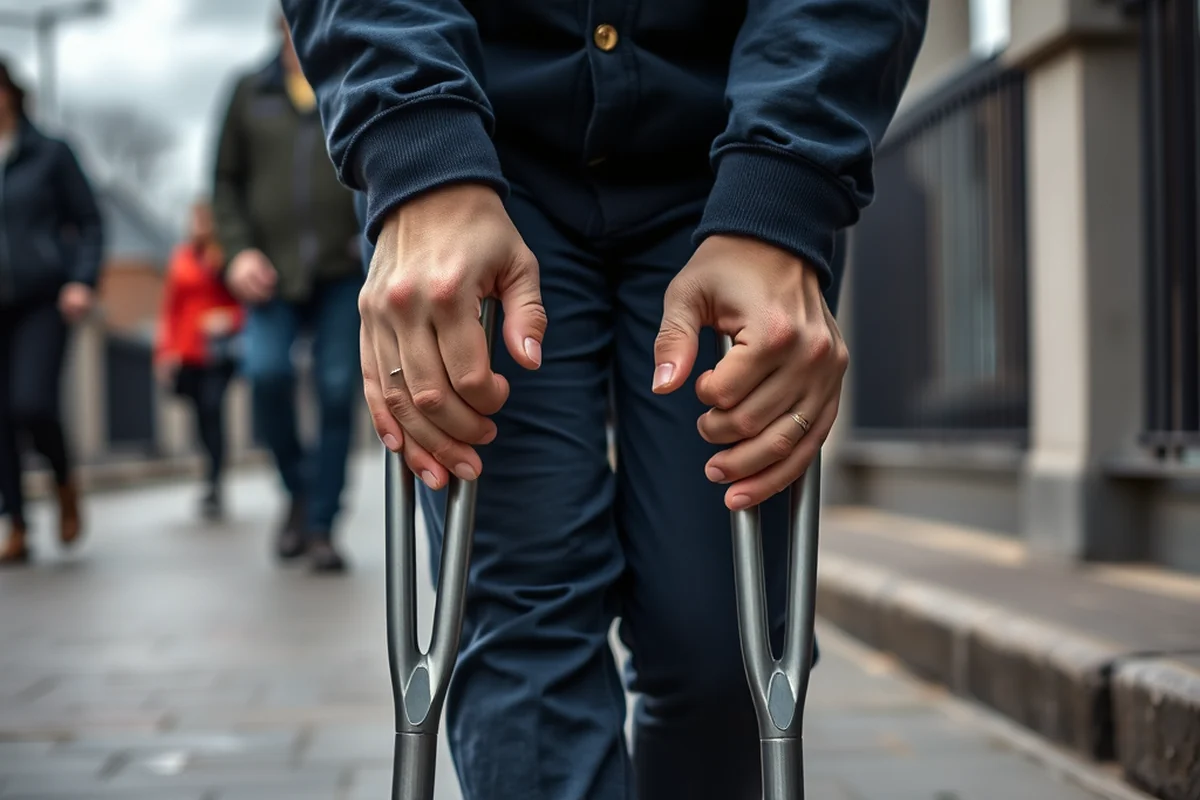
The two-point gait is one of the most common techniques used by people with one functioning leg and one that’s either in a cast or still healing. The method involves moving one crutch and the opposite leg forward together, then repeating the motion with the other crutch and leg. I practiced this gait on the second day after I got my crutches and found that it helped me move more quickly and with less effort than other methods.
I found that keeping my weight evenly distributed between both crutches and my functioning leg was crucial. If I leaned too much on one side, I would stumble. I practiced in front of a mirror for the first hour, and it took about 20 minutes before I felt comfortable enough to move around the house without falling over.[3]
The two-point gait is particularly useful for short distances, like walking from the bedroom to the bathroom. It allows for more mobility and is less tiring than the three-point gait, which I’ll cover in the next section.
The two-point gait moves you forward with purpose — one step at a time.
Related: Nordic walking techniques
The Three-Point Gait
If you have limited use of both legs, the three-point gait is the technique for you. It involves moving both crutches and the injured leg forward together, then stepping with the healthy leg. I found this method slower but much more stable, which was important for me during the early days of my recovery when my left leg was still weak and numb.
I had to be careful not to put too much weight on the injured leg, which is why I used the three-point gait. I found that keeping my body upright and using my arms to push forward with the crutches helped me maintain balance. It took a few days before I could walk more than 50 feet without feeling exhausted.[4]
This gait is especially useful if you’re recovering from a bilateral injury or have trouble standing on both legs. It’s slower, but it gives you a sense of security and control that I didn’t have with the two-point gait.
When using the three-point gait, focus on pushing the crutches forward instead of leaning on them. This helps reduce pressure on your arms and keeps your body aligned.
“I remember the first time I had to walk with crutches — my left leg was in a cast after a broken ankle, and the…”— Back Friendly Walking Techniques editors
Related: Hiking techniques downhill
How to Walk Uphill and Downhill
Walking uphill while using crutches is a challenge, but with the right technique, it becomes more manageable. I found that using the two-point gait uphill was easier than the three-point gait. I leaned slightly forward and used my arms to push the crutches into the ground for extra support. It took me a few days to get the hang of it, but I eventually found a rhythm that worked for me.
Walking downhill was a different story. I had to slow down and keep my weight on my functioning leg. I used the three-point gait for downhill walks and made sure to keep my body centered over the crutches. I practiced on a small hill near my house and found that walking slowly and carefully was the key to staying safe.
Both uphill and downhill walks require more attention and control. I recommend practicing these techniques in a safe, open area before attempting them in a crowded or busy space.
Related: Hiking downhill tips
Staying Balanced and Preventing Falls
I learned early on that balance is the most important factor when walking with crutches. I found that keeping my arms slightly bent and my body upright helped me stay more stable. I also practiced walking in a straight line, which made it easier to maintain my center of gravity.
I experimented with different body positions, and the one that worked best for me was keeping my head up, looking ahead, and not focusing too much on my feet. I also made sure to use my core muscles to support my body, which helped reduce the strain on my arms.
I practiced walking on both flat surfaces and uneven ground, and I found that staying relaxed and not tensing up was key to maintaining balance. I also used a wall for support during the first few days until I felt more confident on my own.
Related: Walk down technique ultrasound
The Importance of Practice and Patience
I tried to walk with crutches every day for the first week, even if it was just for a few minutes. At first, I felt frustrated because I was so slow and clumsy, but I reminded myself that I was still in the learning phase. I practiced in front of a mirror and recorded myself to see where I could improve.
I also made sure to take breaks whenever I felt tired or frustrated. I found that walking for short bursts and then resting for a few minutes helped me build endurance without overexerting myself. It was a slow process, but I could see improvements after a few days.
Patience was the hardest part of the whole experience. I had to remind myself that everyone starts at the same place, and with time and practice, I would get better. It took about a week before I could walk confidently without assistance, and I was proud of myself for making it through.
Progress is not always fast — it's the daily practice that builds strength.
Related: Walk cycle tips
When to Seek Professional Help
I found that after a few days of practicing on my own, I needed help from a physical therapist to refine my technique. She showed me how to adjust my posture and how to use my crutches more efficiently. I also learned how to strengthen my muscles and improve my balance through targeted exercises.
I also found that some people have difficulty walking with crutches due to nerve damage or muscle weakness, and in those cases, professional help is essential. I spoke with a few people who had to see a therapist before they could walk independently, and they all said it was worth the effort.
If you're struggling with crutch use or feel like you're not making progress, don't hesitate to seek help. There's no shame in asking for assistance, and it can make a big difference in your recovery.
👣 Beginner
Start with the three-point gait and focus on balance and posture — it's slower but safer for new users.
💰 Budget
Use lightweight, adjustable crutches with padded hand grips — they're affordable and comfortable for most users.
🏃♂️ Fastest
Try the two-point gait for quicker movement — ideal for short distances and people with one functioning leg.
🏋️♂️ Advanced
Master both gait techniques and incorporate strength training to build core and upper body endurance.
🔧 Maintenance
Keep your crutches in good condition by inspecting them regularly and replacing worn-out parts.
| The mistake | Why it happens | The fix |
|---|---|---|
| Using crutches that are too short or too long | Incorrect crutch length can lead to poor posture, increased strain on the arms, and a higher risk of falling. | Always measure your height at the wrist and adjust the crutches so that the hand grips are level with your wrists. |
| Walking too fast without proper technique | Moving too quickly can increase the risk of losing balance, especially when using crutches for the first time. | Walk at a slow and steady pace, and practice in a safe, open area until you feel more confident. |
| Putting too much weight on the injured leg | This can cause additional pain and delay recovery, especially if the leg is in a cast or still healing. | Use the crutches for support and avoid putting any weight on the injured leg until your doctor approves it. |
| Ignoring proper posture and body alignment | Poor posture can lead to back pain, shoulder strain, and a lack of stability while walking. | Keep your body upright, your arms slightly bent, and your core engaged to maintain balance and reduce strain. |
How To Walk In Crutches
Common Questions
How long does it take to get used to walking with crutches?
What should I do if I feel unstable while walking with crutches?
Can I use crutches if I have a full leg injury?
What is the best way to store crutches when not in use?
References
Cite this guide
Back Friendly Walking Techniques (2026). How To Walk In Crutches. https://walkspine.com/how-to-walk-in-crutches/
Feel free to cite or share this guide.