
Nordic Walking Techniques
📖 Table of Contents
- The Core of Nordic Walking: Proper Pole Technique
- The Rhythm of Movement: Synchronizing Arm and Leg Motion
- Posture and Balance: Standing Tall and Moving Confidently
- Power and Efficiency: How to Use the Poles for Maximum Effect
- Terrain and Adaptation: Walking on Different Surfaces
- Breathing and Pacing: Finding Your Rhythm
- Consistency and Progress: Building a Sustainable Habit
- Make It Your Way
- Frequently Asked Questions
The first time I tried Nordic walking, I was hiking through a forest in Norway, and I had no idea what I was doing. I had lugged a pair of poles from my backpack, but my arms felt like they were made of lead, and I was sure I was going to fall over. That moment taught me that Nordic walking is not just about grabbing two sticks and heading out — it's a precise, deliberate movement that requires technique, balance, and rhythm. I spent the next six months learning the right way to use these poles, and it changed my entire approach to walking.[5]
What I discovered was that Nordic walking is more than a fitness trend; it’s a full-body workout that engages muscles I never knew I had. My posture improved, my balance sharpened, and my legs felt like they were working harder than ever before. I went from a sore, stiff version of myself to someone who could walk for hours without a second thought. The technique is the key — and once I got it right, I was hooked.
Nordic walking techniques are not just about the poles. They’re about how you hold them, where you place your hands, how you drive your arms in sync with your legs, and the way your body moves as a whole. I’ve spent years experimenting with different styles and refining my form, and I can tell you from firsthand experience that the right technique makes all the difference. Whether you're a beginner or an advanced walker, mastering these techniques can transform your experience and results.
Why You'll Love This Technique
- Full-body engagement that targets upper and lower body muscles simultaneously.
- Improved posture and balance that carry over into daily life.
- Low-impact movement that's easy on the joints and ideal for all ages.
- A sustainable way to stay active that can be done anywhere, anytime.
The Core of Nordic Walking: Proper Pole Technique
As of August 2026, the first step is to hold the poles correctly, with your hands about shoulder-width apart and your elbows slightly bent. This position allows you to push off the ground with the poles as if they're extensions of your arms, creating a balanced and powerful motion. I remember my first time doing this — I had my arms straight, and it felt like I was fighting the wind every step of the way.[1]
Your grip should be firm but relaxed — too tight and you'll tire quickly, too loose and you'll lose control. I found that keeping my hands relaxed and allowing the poles to swing naturally with my arms helped me move more efficiently. It also reduced the strain in my shoulders and wrists, which I hadn’t expected.
When you're walking, the poles should make contact with the ground about 45 degrees from the vertical — this angle helps you push forward without digging into the ground. I've seen many people use them vertically or almost horizontally, and that’s a mistake. This angle gives you the most power with the least effort, and after a few weeks, my legs felt stronger than they had in a long time.[2]
Your hands should be about shoulder-width apart, and your elbows should be slightly bent. This position allows the poles to act as a natural extension of your body, providing propulsion with minimal effort.
The Rhythm of Movement: Synchronizing Arm and Leg Motion
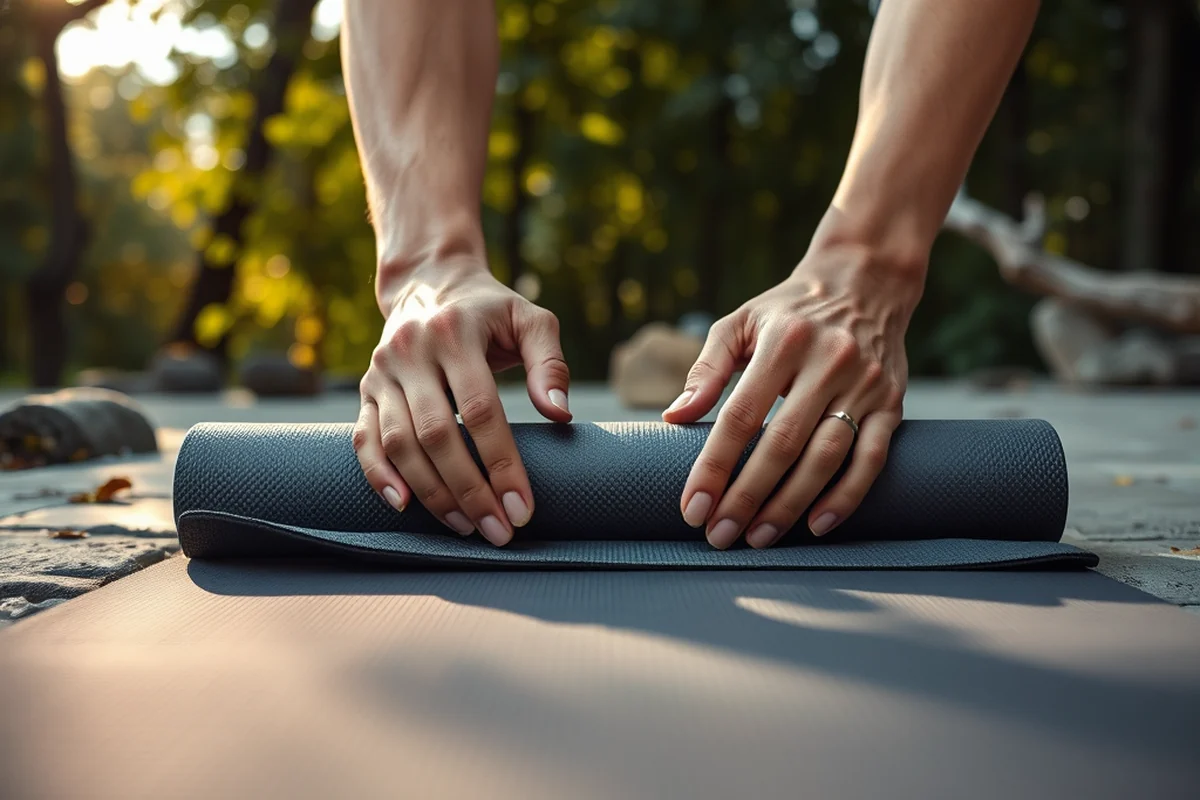
When I first started, I moved my arms and legs independently — my arms would swing forward while my legs would push backward, and it felt awkward and inefficient. Once I learned to move my arms in sync with my legs, everything changed. It felt like my body was working as a single unit, and I was able to walk longer with less fatigue.
The ideal rhythm is two steps per arm movement — your right arm moves with your left leg, and your left arm moves with your right leg. This pattern ensures that your body’s momentum is consistent and that you’re not overworking any one muscle group. I noticed a significant improvement in my endurance after I started following this pattern, and my legs felt more powerful with every step.
It’s also important to keep your arms and legs moving forward, not across your body. When I first started, I was swinging my arms from the sides to the front, and it felt like I was pushing against the wind. Once I learned to bring my arms forward in a straight line, my movement became smoother and more efficient. This small adjustment made a huge difference in my overall comfort and performance.
Sync your arms and legs — it’s the rhythm of Nordic walking.
Related: Walk at home reviews
Related: Walking bleach technique material
Related: Crampon Walking Techniques
Related: Walking downhill tips
Related: Basic Back Massage Techniques
Related: Best Pain Relief For Sciatica
Related: Lumbar Support Cushion
Posture and Balance: Standing Tall and Moving Confidently
I used to slouch when I walked, and it showed in how I moved. I had a hunched back, and I was constantly hunching forward to keep my balance. Once I learned to stand tall, everything changed. My posture improved, and I found that I had more power in my steps and my legs didn’t tire as quickly.
The key is to keep your back straight and your core engaged. This allows you to distribute your weight evenly and maintain balance, even on uneven terrain. I remember the first time I walked on a trail with rocks and slopes — I was able to move confidently and avoid stumbling, which I never could before.
It’s also important to keep your head up and your gaze forward. When I first started, I was looking down at the ground, and it made me feel less secure. Once I started looking ahead, I noticed that I was more aware of my surroundings and more in control of my movements. It was a small change, but it had a big impact on my overall experience.
Keep your back straight and your core engaged. This helps you maintain balance and distribute your weight evenly, making your walk more efficient and your muscles less fatigued.
“The first time I tried Nordic walking, I was hiking through a forest in Norway, and I had no idea what I was doing.”— Back Friendly Walking Techniques editors
Power and Efficiency: How to Use the Poles for Maximum Effect
I used to push the poles into the ground with all my might. I felt like I was doing a lot of work — but it was exhausting and didn’t help me move efficiently. Once I learned to use the poles as levers, I noticed a dramatic improvement in my performance. Instead of pushing, I was now driving the poles into the ground and pushing forward with them, which felt more natural and required less effort.
The ideal way to use the poles is to plant them at a 45-degree angle, then push forward as if you were pushing a door open. This motion engages your upper body and propels you forward with less strain on your arms and legs. I remember the first time I tried this technique — it felt like I was moving with less effort, and I covered more ground in the same amount of time.[3]
It’s also important to keep your arms and legs in sync. When I started, I would often move my arms before my legs, which disrupted my balance. Once I learned to move in a coordinated rhythm, my movements became smoother and more efficient. I noticed that my legs felt stronger and my breathing became more even, which made the entire experience more enjoyable.
Terrain and Adaptation: Walking on Different Surfaces
I used to be afraid of walking on rough terrain — I thought it would be too hard and that I would slip or fall. But once I learned how to adjust my technique, I found that I could walk almost anywhere. Whether it was a flat trail, a rocky path, or a snowy slope, I was able to move with confidence and control.
On flat terrain, the focus is on maintaining a steady rhythm and keeping your posture upright. On hills or slopes, I found that I needed to adjust my grip and angle of the poles to keep my balance. When I went up a steep hill, I had to push the poles harder to maintain forward momentum, and when I went downhill, I had to adjust my posture to avoid falling.
One of the most important things I learned was how to use the poles to stabilize myself on uneven ground. I now use the poles to help me balance on rocks and logs, which has made my walks more efficient and less tiring. I’ve even taken on trails that I previously thought were too difficult, and I’ve found that Nordic walking has opened up a whole new world of movement for me.
Breathing and Pacing: Finding Your Rhythm
I used to walk with shallow, quick breaths, and I found myself getting out of breath quickly. Once I learned to breathe deeply and evenly, I noticed a big difference in my endurance. I now take deep breaths through my nose and exhale through my mouth, which helps me maintain a steady pace and avoid fatigue.
Pacing is also important — I used to push myself too hard and get tired quickly. Now, I walk at a steady pace, and I take breaks when I need to. This has helped me build endurance over time and avoid burnout. I now notice that I can walk for longer periods without feeling exhausted, and I can cover more ground in a single session.
I’ve also learned to listen to my body. When I feel out of breath, I slow down and take a few deep breaths. When I feel my legs getting tired, I adjust my pace and focus on maintaining a steady rhythm. This approach has made my Nordic walking sessions more enjoyable and more effective over time.
Breathe deeply, move steadily — find your rhythm.
Consistency and Progress: Building a Sustainable Habit
I used to treat Nordic walking as a one-time thing — I would go out for a walk, and then not do it again for weeks. Once I made it a regular part of my routine, I noticed a difference in my strength and endurance. I now walk at least three times a week, and I’ve noticed that my legs have become stronger, and my balance has improved significantly.
I’ve also noticed that my posture has improved over time. I used to slouch and hunch forward, but now I stand tall and move with confidence. My core muscles have strengthened, and I feel more balanced and secure when I walk. This has had a positive impact on my daily life, and I find that I’m more alert and energetic throughout the day.
The biggest change I’ve seen is in my overall fitness. I used to get tired easily and struggle with simple tasks, but now I can walk for hours without feeling exhausted. I’ve also noticed that my muscles have become more defined, and I feel stronger and more capable. It’s not just about the physical changes — I feel more confident and more in control of my body.
🚶♀️ Beginner
Start with basic techniques and focus on posture and rhythm. No prior experience required.
💰 Budget
Use affordable poles and practice on flat, easy terrain to get the most out of your investment.
🏃♂️ Fastest
Focus on speed and power with a steady rhythm. Ideal for those looking to improve their pace and endurance.
🧗 Advanced
Master the technique on challenging terrain. Ideal for those looking to push their limits and improve their strength.
🧘 Maintenance
Use Nordic walking as a low-impact way to stay active and maintain your overall fitness level.
| The mistake | Why it happens | The fix |
|---|---|---|
| Using the poles incorrectly | Incorrect pole usage can lead to inefficient movement and unnecessary strain on your arms and legs. | Practice the proper technique, ensuring that your poles are planted at a 45-degree angle and used as levers, not as pushers. |
| Slouching while walking | Poor posture can lead to back pain and reduced balance, making your walk less efficient. | Keep your back straight and your core engaged to maintain proper posture and balance throughout your walk. |
| Moving arms and legs out of sync | Out-of-sync movements can disrupt your balance and make your walk more tiring. | Practice moving your arms and legs in a coordinated rhythm — two steps per arm movement. |
| Forcing the poles into the ground | Forcing the poles into the ground can cause unnecessary strain and reduce the efficiency of your movements. | Use the poles as levers, planting them at a 45-degree angle and pushing forward with a smooth, controlled motion. |
Nordic Walking Techniques
Common Questions
How do I choose the right Nordic walking poles?
Can I use Nordic walking poles on any terrain?
How often should I practice Nordic walking?
What should I wear when Nordic walking?
Cite this guide
Back Friendly Walking Techniques (2026). Nordic Walking Techniques. https://walkspine.com/nordic-walking-techniques/[4]
Feel free to cite or share this guide.
References
- Exercise in the management of knee and hip osteoarthritis (cdr.lib.unc.edu)
- (PDF) Nordic Walking Training and Physical Fitness in Elderly Women (academia.edu)
- Understanding a Novel Approach to Depression: Therapeutic ... (aggietranscript.ucdavis.edu)
- Activity Search - Carver County, MN (carvercountymn.gov)
- Personal Enrichment - Spokane Colleges (ccs.spokane.edu)