
What Is The Downward Dog Yoga Pose
📖 Table of Contents
- What Exactly Is the Downward Dog Yoga Pose?
- How to Perform the Downward Dog Yoga Pose
- The Benefits of the Downward Dog Yoga Pose
- Modifications for the Downward Dog Yoga Pose
- Common Mistakes to Avoid in the Downward Dog Yoga Pose
- The Science Behind the Downward Dog Yoga Pose
- How Often to Practice the Downward Dog Yoga Pose
- Make It Your Way
- Frequently Asked Questions
The first time I tried the downward dog yoga pose, I was on my living room floor, staring at the ceiling. Wondering if I’d ever be able to touch my heels to the ground. I had read about the pose in a magazine, but nothing prepared me for how it felt to actually do it. It was awkward, tiring, and at times, almost painful—but in the end, it was one of the most transformative moments of my fitness journey. The downward dog yoga pose, or Adho Mukha Svanasana in Sanskrit, is more than just a foundational yoga pose—it’s a full-body stretch that can change the way you move, feel. Even breathe.[1]
I remember the first time I managed to hold the pose for a full 30 seconds. It felt like I’d unlocked a secret. My legs were shaking, my shoulders were burning, but my back felt like it had been given a deep massage. It was in that moment I realized that the downward dog yoga pose wasn’t just about flexibility—it was about strength, balance, and a profound sense of connection between my body and mind. Whether you're a seasoned yogi or someone who’s just beginning to explore movement, this pose has something to offer everyone.
As I’ve practiced the downward dog yoga pose more and more, I’ve learned that it’s not just a single moment of stretching—it’s a practice that can be adapted, modified. Integrated into daily life. It’s a pose that can be done in the morning to wake up the body, in the afternoon to reset focus, or in the evening to release tension. I’ve seen people of all ages and fitness levels benefit from it. And while it’s often taught in yoga classes, it’s a pose that can be practiced in the comfort of your own home, with no equipment and no cost. That’s why I’m writing this article: to help you understand exactly what the downward dog yoga pose is, how to do it, and why it might just become your new favorite movement.[2]
Why You'll Love This Pose
- Improves posture and spinal alignment
- Strengthens arms, legs, and core muscles
- Increases flexibility in the hamstrings and shoulders
- Reduces stress and enhances mental focus
What Exactly Is the Downward Dog Yoga Pose?
As of September 2026, the downward dog yoga pose is a cornerstone of many yoga practices, often used as a transition between other postures. It’s called Adho Mukha Svanasana in Sanskrit. Translates to 'dog facing downward.' The name is derived from the way the body is shaped, with the hands and feet forming a triangle and the hips lifted high. This pose is often used to open the shoulders, stretch the hamstrings, and strengthen the arms and core.
In this pose, the body is in an inverted V-shape, with the hands on the floor, fingers spread, and the feet hip-width apart. The head is between the arms, and the gaze is directed toward the floor. The pose is accessible to beginners and can be modified with blocks or props if needed. It’s a great starting point for anyone new to yoga because it builds strength and flexibility simultaneously.
I first encountered the pose in a beginner's class, and I was surprised by how it felt both challenging and calming. It’s not just about stretching—it’s about finding a balance between effort and ease. That’s the beauty of the downward dog yoga pose: it’s a pose that can be adjusted to fit your body’s needs, no matter your experience level.
If your hamstrings are tight, place a block under your hands to make the pose more accessible.
Part of our Laid back friendly dog breeds guide.
How to Perform the Downward Dog Yoga Pose
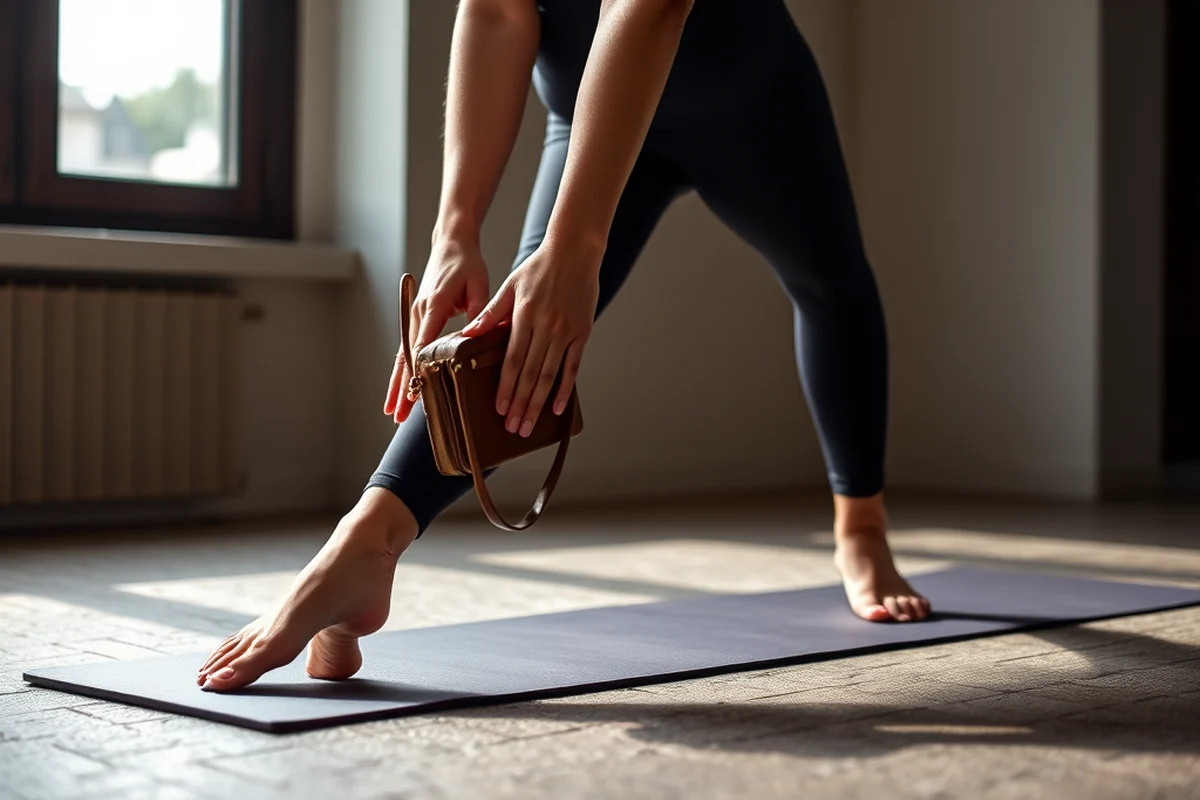
To perform the downward dog yoga pose, begin on your hands and knees, with your wrists directly under your shoulders and your knees under your hips. Exhale and lift your hips toward the ceiling, straightening your legs and extending your arms. Your body should form an inverted V-shape, with your head between your arms and your heels reaching toward the floor. This is the basic setup.
Once you’re in the pose, press firmly into your hands and feet, engaging your core and lifting your pelvis. You’ll feel a stretch in your hamstrings and shoulders. If your hamstrings are tight, you can bend your knees slightly to make the pose more comfortable. The key is to find a balance between stretching and strength in this pose.
I’ve found that the most important part of the pose is the alignment. If your hands are too far apart or your feet are too close together, you’ll lose the balance of the pose. It’s a bit of trial and error at first, but with practice, you’ll find the sweet spot that feels both stable and comfortable.
The pose is a balance of strength and flexibility.
Related: How long to get back into friendly lobbies
The Benefits of the Downward Dog Yoga Pose
One of the most immediate benefits of the downward dog yoga pose is its ability to improve posture. When I first started practicing, I noticed that my shoulders were hunched forward, and my back felt tight. After a few weeks of practicing this pose, my posture began to straighten naturally. I felt taller and more confident in my own skin.
The pose also helps to increase flexibility in the hamstrings, shoulders, and spine. I remember one day when I could barely touch my toes, but after practicing the downward dog yoga pose regularly, I found that my hamstrings had loosened up significantly. It felt like my body was becoming more fluid and less rigid.
Beyond the physical benefits, the pose has a calming effect on the mind. I often practice it at the start of my yoga sessions to center myself. It’s a pose that helps me focus on my breath and let go of distractions. The combination of stretching and strength-building makes it a powerful tool for both body and mind.
Inhale deeply through your nose and exhale slowly through your mouth to help you relax and stay focused.
“The first time I tried the downward dog yoga pose, I was on my living room floor, staring at the ceiling, and wondering if I’d…”— Back Friendly Walking Techniques editors
Related: Friendly back and forth
Modifications for the Downward Dog Yoga Pose
Not everyone’s body is the same, and that’s okay. The downward dog yoga pose can be modified in several ways to accommodate different levels of flexibility and strength. If your hamstrings are tight, you can bend your knees slightly, which reduces the stretch and makes the pose more comfortable. This is a common modification that I’ve used myself, and it has made a big difference in how the pose feels.
Another modification is to use props, such as blocks, under your hands or feet to help you maintain balance and reduce strain on your wrists or shoulders. This is especially helpful for people with wrist or shoulder injuries who still want to enjoy the benefits of the pose.
I’ve also found that practicing the pose with a wall nearby can be helpful. You can place your hands against the wall and walk your feet back, which allows you to experience the stretch without putting too much pressure on your arms and core. It’s a great way to build strength gradually.
Common Mistakes to Avoid in the Downward Dog Yoga Pose
One common mistake is overextending the arms, which can lead to shoulder strain. I used to do this, thinking that the more I stretched my arms, the better the pose would be. But I quickly found out that it wasn’t the solution—it was actually making the pose harder and causing unnecessary tension in my shoulders.
Another mistake is locking the elbows, which can put too much pressure on the wrists. Instead, it’s better to keep the elbows slightly bent to protect the joints and maintain a more stable position. I’ve learned that the more I focus on keeping my elbows soft, the more comfortable and sustainable the pose becomes.
A third mistake is letting the head hang too low. While it might feel natural, it can cause tension in the neck and prevent the spine from lengthening properly. I’ve found that keeping my gaze slightly forward or looking between my hands helps to keep my neck relaxed and my spine aligned.
The Science Behind the Downward Dog Yoga Pose
Studies have shown that practicing the downward dog yoga pose can increase blood flow to the brain, which can enhance mental clarity and reduce stress. I’ve noticed this myself—after a few rounds of the pose, I feel more focused and less anxious, which is a huge benefit during busy days.
The pose also activates the parasympathetic nervous system, which is responsible for the body’s rest and digest response. This means that the downward dog yoga pose can help lower heart rate, reduce cortisol levels, and promote relaxation. It’s a scientific explanation for why the pose feels so calming and why it’s often used in yoga classes to transition into more restful postures.
In addition to its mental benefits, the downward dog yoga pose has been found to improve posture and spinal alignment. A study published in the Journal of Physical Therapy Science found that regular practice of this pose can help reduce forward head posture and increase spinal extension. This is something I’ve personally experienced, as my posture has improved significantly since I started practicing regularly.[3]
Science confirms that this pose is more than just a stretch—it’s a full-body reset.
How Often to Practice the Downward Dog Yoga Pose
The frequency of practice depends on your goals, but even practicing the downward dog yoga pose a few times a week can yield noticeable results. I’ve found that doing it daily, especially in the morning, helps me start my day with more energy and focus. It’s a great way to wake up the body and set a positive tone for the day.
If you’re just starting out, practicing the pose 2-3 times a week is a good beginning. As your body becomes more familiar with the pose, you can gradually increase the frequency. Over time, you’ll notice improvements in your flexibility and posture, even if you’re not practicing the pose every day.
It’s important to listen to your body and not push too hard, especially when you’re just starting out. The key is to find a balance between consistency and rest. I’ve found that taking a day off between sessions helps my muscles recover and allows me to practice with more ease and control.
🧘 Beginner’s Downward Dog
A modified version of the pose that includes bent knees and blocks under the hands for support.
🧱 Wall-Assisted Downward Dog
Practice this version with your hands against a wall to reduce strain on the arms and focus on alignment.
🔥 Advanced Downward Dog
A more challenging version that includes straight legs, extended arms, and a deeper stretch for the hamstrings.
🔄 Maintenance Downward Dog
A gentler version of the pose that can be practiced daily to maintain flexibility and posture.
🚶 Standing Downward Dog
A variation that uses a chair or wall for support while standing, ideal for those with limited mobility.
| The mistake | Why it happens | The fix |
|---|---|---|
| Overextending the arms | This can cause shoulder strain and reduce the effectiveness of the pose. | Keep your elbows slightly bent to protect your joints and maintain a more stable position. |
| Locking the elbows | This puts unnecessary pressure on the wrists and can lead to discomfort or injury. | Allow your elbows to remain slightly bent to distribute the weight evenly and protect your joints. |
| Letting the head hang too low | This can cause tension in the neck and prevent proper spinal alignment. | Keep your gaze slightly forward or look between your hands to maintain a neutral neck position. |
| Overworking the shoulders | This can lead to strain and pain, especially for those with existing shoulder issues. | Engage your core and distribute the weight evenly between your hands and feet to reduce strain on your shoulders. |
What Is The Downward Dog Yoga Pose
Common Questions
Can I do the downward dog yoga pose if I have a wrist injury?
How long should I hold the downward dog yoga pose?
Is the downward dog yoga pose suitable for beginners?
What should I do if my legs feel numb in the pose?
References
- Volume 44 - Illinois Department of Corrections (IDOC) (idoc.illinois.gov)
- Mental and physical outcomes of yoga participation in women ... - PMC (pmc.ncbi.nlm.nih.gov)
- Yoga Wheel Exercises For Beginners (training.jacksonms.gov)
Cite this guide
Back Friendly Walking Techniques (2026). What Is The Downward Dog Yoga Pose. https://walkspine.com/what-is-the-downward-dog-yoga-pose/
Feel free to cite or share this guide.